Blind / Visual Impairment Basics
Support and Planning
Understanding and meeting each child's visual needs improves opportunities to learn and gives them more chances to take part in activities like academics, clubs or sports. When students are truly included in the classroom and the community, everyone gains. This begins with careful planning to give the right supports for both students and staff.
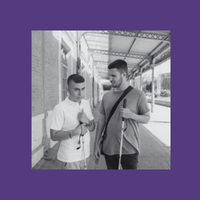
Students with visual impairments often learn best from explicit instruction that involves pre-teaching concepts and vocabulary, modeling, and time for hands-on practice. This makes support and careful planning very important for teachers and team members. In addition to the general education curriculum, students with visual impairments need to learn functional skills as early as possible. These skills help them move around, get information, join activities, and complete daily tasks with confidence. Important areas include:
- Orientation & Mobility — using a cane, crossing streets safely, and spatial awareness
- Independent Living — cooking, personal care, handling money, staying organized, and using touch and auditory information.
- Compensatory Skills — using braille, large print, screen readers, low-vision tools, and tactile graphics.
- Social & Communication — being a self-advocate, reading social cues, and interacting with peers.
- Assistive Technology — using low- and high-tech devices and software
These skills are needed for daily life, learning, and future employment. Decisions about what skills to teach come from assessments and recommendations by vision specialists who work with the student and the school team.
Teaching functional skills in a natural environment is a critical piece for setting learners up for success. Students may struggle to generalize skills in different spaces so instruction should occur in the settings where the skill will actually be used whenever possible. Involve parents for consistency at school and at home. Track progress related to understanding and level of independence.
Plan learning spaces that are language-rich and support access by doing things like:
- Allowing time for exploration
- Consider the physical layout of the room or area
- Checking and improving lighting conditions
- Reducing clutter
- Keeping routines and ways of doing things consistent
- Increasing contrast where it makes sense
- Making signs and labels clear and accessible
- Helping classmates understand and be sensitive to the student’s needs
Students with visual impairments and the educators who help them have different experiences, preferences, and comfort levels. Knowing the kinds of vision loss, what signs to watch for, each team member’s role, and common challenges helps everyone work better together to reach goals. This is why working with a Teacher of the Visually Impaired (TVI) is important for training, advice, and solving problems.
When teams understand a student’s needs, they can plan the right accommodations and changes so the student gets the support needed to do well. Working together helps students get information, join social activities, and make the most of each school day.
Full membership in the classroom and community makes school better for everyone. Encouraging students to share experiences and learn about each other's ways of accessing information from an early age, while keeping high expectations, helps build understanding and acceptance for future success. Below are planning documents where these ideas can be used:
Individualized Family Service Plan (IFSP)
- Ages: Birth to 3 years old.
- Focus: Family-centered; focuses on child development and family needs, with services provided at home/community.
- Governed By: Individuals with Disabilities Education Act
Individualized Education Program (IEP)
- Ages: 3 to 21 (or high school graduation).
- Focus: Specialized instruction, related services, and measurable goals for academic/functional progress in school.
- Governed By: Individuals with Disabilities Education Act; requires a student to fit one of 13 specific disability categories.
Section 504 Plan
- Ages: Any school-aged child.
- Focus: Removing barriers and ensuring equal access to education through accommodations (e.g., extra time, ramps) for students with disabilities not qualifying for an IEP.
- Governed By: Section 504 of the Rehabilitation Act
Individual Plan for Employment (IPE)
- Vocational services through Opportunities for Ohioans with Disabilities, or rehabilitation services, available for school-aged students starting at age 14.
- Requires documentation of a student's disability to establish eligibility for services.
- The IPE drives the services provided to transition age youth through rehabilitation services.
- Measurable post-secondary goals in a student's IEP are intended to provide a starting place for development of the IPE.
Ongoing evaluation helps parents and school staff see how a student is doing with academic and daily living goals. A full reevaluation must happen at least once every three years, or more often if the team members feel there is a need. A reevaluation may also be done if the initial evaluation was given when the child was very young, and is showing big changes in performance, changes in behavior, or if they're not making progress. As students grow, visual demands change, so teachers should monitor progress and reassess when needed.
The Teacher of the Visually Impaired (TVI) and the Certified Orientation & Mobility Specialist (COMS) may provide the following to assess the learner's ongoing educational needs:
- Do a Functional Vision Learning Media Assessment to determine modifications and accommodations for instruction.
- Do an Orientation & Mobility Evaluation.
- Check progress on Expanded Core Curriculum goals.
- Use data to make program recommendations.